
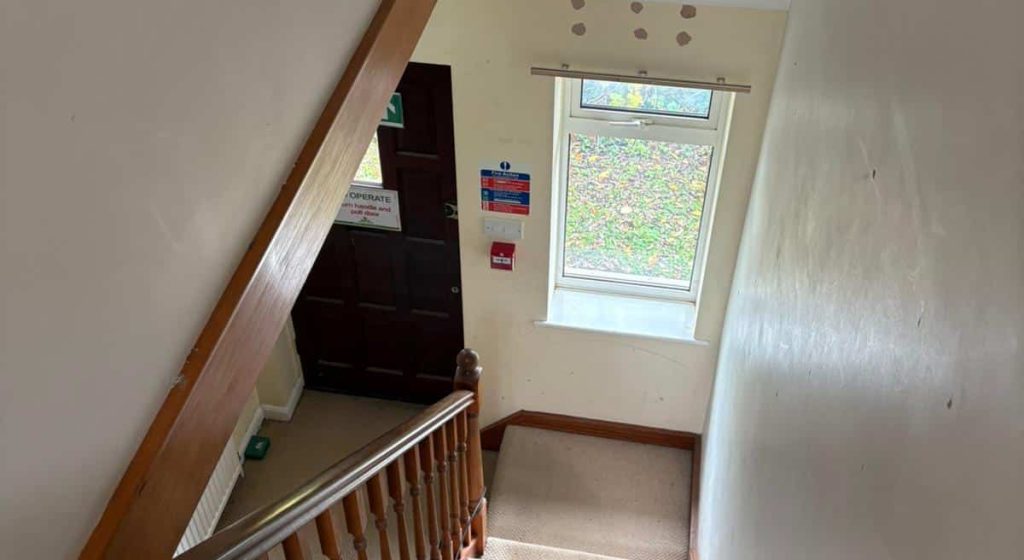
New Grade A / Category L3 Fire Alarm System Installed
We recently carried out a comprehensive fire alarm system upgrade at a multi‑occupancy HMO building in Bournemouth. The goal was to replace the older system with a fully compliant Grade A fire alarm installation, configured to Category L3 coverage under BS 5839‑1 — ensuring life‑safety protection across all escape routes and rooms opening onto them.
Why This Upgrade Was Required
- The building has multiple floors and rooms accessed via shared staircases and corridors — making early fire detection critical for safe occupant evacuation.
- The previous system did not offer full automatic detection coverage in all rooms that open onto escape routes. Under Category L3 this would not meet best‑practice standards.
- As part of the upgrade, we ensured documentation, zoning, wiring, and device placement all met the recommended specification for life protection systems (Category L).


Scope of Works
- Installed new ceiling‑mounted automatic fire detectors in the hallways, stair‑wells and communal areas (visible in several photos).
- Extended detection into all rooms that open onto escape corridors or stair‑cases, in line with L3 specification.
- Supplied and mounted new control and indication equipment (“Grade A” panel) with correct mains and standby power supply.
- Carried out full wiring, cabling, device mounting, detector base installation and tested for correct cause‑and‑effect behaviour.
- Completed commissioning: detector testing, alarm sounder testing, zone verification, handover‑documentation, occupant instructions.
- Provided updated zone diagrams, user‑instructions and ensured the system meets the requirements for future inspection and servicing.
What Does Category L3 Mean?
Category L3 is a life protection fire alarm system category under BS 5839‑1. It is defined by providing automatic fire detection in all escape routes and additionally in rooms or spaces that open onto those escape routes.
In practical terms for this job:
- Escape corridors, staircases, and exits are covered by detectors.
- All rooms that adjoin those routes (bedrooms, flats, communal rooms) are also covered by detection.
- This ensures occupants receive early warning, well before escape routes become impassable by smoke or fire.
Why Use the “Grade A” Classification?
Grade A refers to a system incorporating:
- Control & indicating equipment compliant with EN 54‑2,
- Mains and standby power supply compliant with EN 54‑4,
- Installed in line with BS 5839‑1 design and commissioning best‑practice.
Choosing a Grade A system provides a higher level of assurance for life‑safety and future maintenance.
Outcome & Benefits for the Client
- The premises now has a professionally installed, fully commissioned system that meets Category L3 requirements — increasing the safety of tenants and the building.
- Presence of detection in all rooms opening onto escape routes means early warning is improved, giving more time for evacuation or fire service response.
- Clear documentation and control panel labelling make ongoing testing, servicing and inspections more straightforward.
- The system upgrade supports compliance with fire safety regulations (via the employer/landlord’s duty under the Regulatory Reform (Fire Safety) Order 2005) and reduces risk of non‑compliance.
- From a practical perspective, the installation minimised disruption, utilized pre‑existing routes where possible, and maintained neat wiring and layout as shown in the images.
Next Steps / Maintenance Recommendations
- Encourage the building manager or responsible person to maintain the log‑book, schedule six‑monthly servicing and annual full inspection.
- Replace standby batteries every 3‑5 years (or as manufacturer recommends) to ensure the system remains reliable during mains failure.
- Always record any modifications, variations or extensions as a change of system coverage may require re‑assessment of the category.
- Periodically review the fire risk assessment — if use of rooms changes or occupancy profile changes, the category (L3) may need review or upgrading to L2 / L1.


