
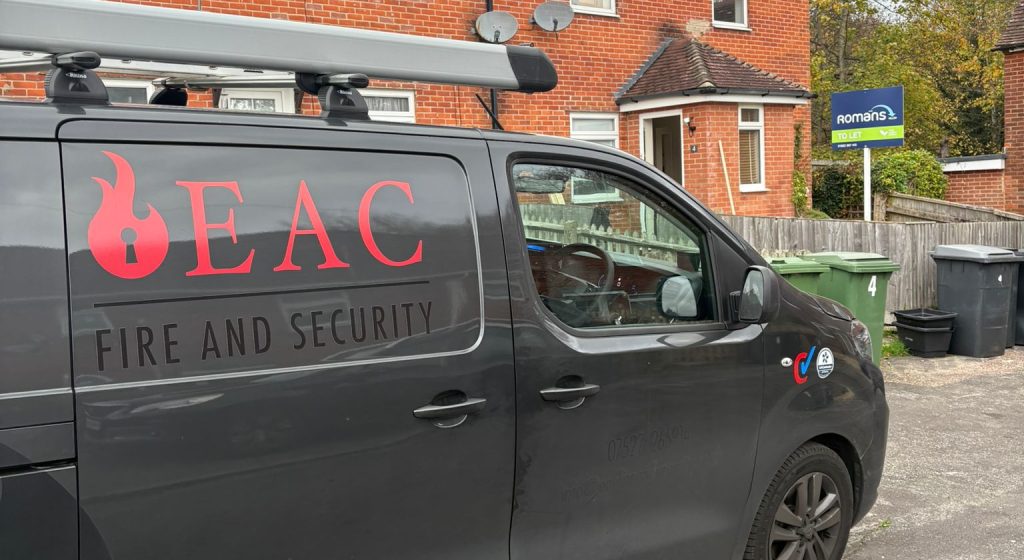
Additional detection installed to meet bedroom coverage, with replacement of outdated devices
The client has acquired a house for conversion into an HMO in Winchester. Although there were existing fire alarms installed in communal areas, none of the bedrooms had dedicated detection. We therefore undertook the following:
- Supplied and installed 5 additional Aico 3000 Series Optical Smoke Alarm units, covering all bedrooms.
- Replaced 2 out‑of‑date detectors with new compatible units.
- Ensured all devices are inter‑linked (hard‑wired or wireless as per existing system) and powered correctly.


Why This Was Necessary
- For HMOs, detection in rooms that open onto escape routes (or are bedrooms themselves) is increasingly required in modern fire safety practice.
- According to the landlord‑safety requirements, alarms must be installed on every storey of living accommodation and comply with relevant standards.
- Correct siting of alarms is critical: for example, an alarm should be within 3 metres of every bedroom door, be positioned on the ceiling and at least 300 mm away from obstructions.
Works Completed
- Mapped the layout of the HMO to identify bedrooms lacking detection and implemented coverage accordingly.
- Fitted new optical smoke alarms (Aico 3000 Series) in each bedroom — chosen for reliability in a residential environment.
- Removed and replaced the old devices (which were either beyond service life or did not meet current spec).
- Tested each alarm, verified interlink operation (so triggering one unit will trigger all), and completed hand‑over with the client including testing logs and certificates.
Outcome & Benefits
- Bedrooms are now covered with compliant detection devices, enhancing occupant safety and reducing risk.
- The client is positioned to meet rental‑property/fire‑safety regulatory expectations for HMOs.
- The upgrade adds value to the property by aligning it with best practice for fire detection systems, making it more attractive to tenants and more defensible for the landlord.
Next Steps & Recommendations
- Advise the client to maintain a log of monthly quick checks (press test button) and annual full servicing.
- Recommend replacing detectors at end‑of‑life — most detectors reach their useful life around 10 years, so plan accordingly.
- Encourage integration of the system into a full HMO fire risk assessment so that other requirements (emergency lighting, signage, escape routes) are reviewed as well.


