
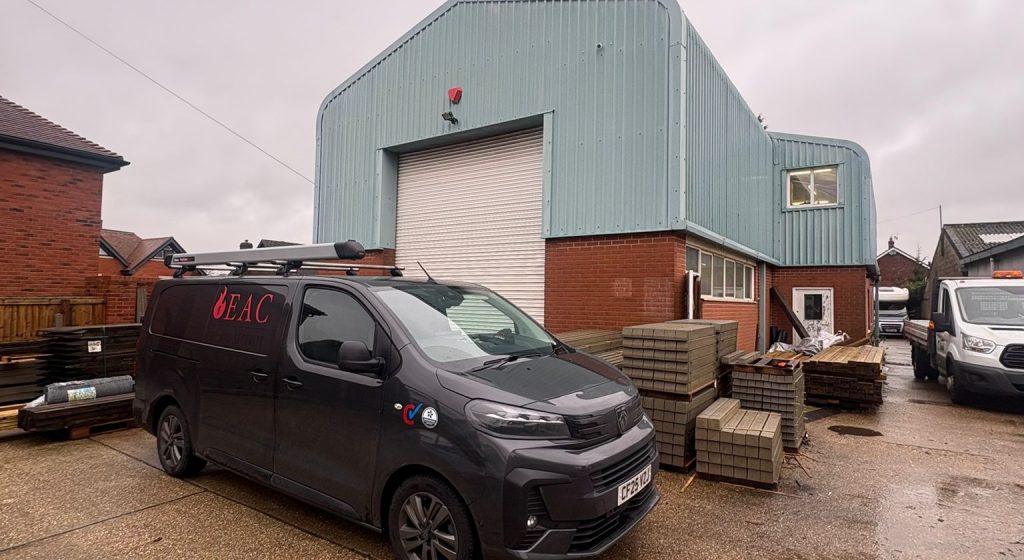
We were called to Prospect Fencing in Alresford to carry out a routine fire alarm service and investigate why the system had been experiencing numerous false alarms over recent weeks.
False alarms can occur for a variety of reasons, from wiring issues to environmental conditions to detector contamination, so a careful, systematic approach was taken.
What We Did
1. Full System Inspection & Service
Our engineer performed a complete service of the fire alarm system as per BS 5839-1 recommended practice, including:
- Visual inspection of all detectors and wiring
- Functional testing of sounders, zones and control panel
- Checking continuity and condition of cabling
- Verifying correct detector spacing and placement
- Battery and supply checks
2. Root Cause Identified — Contaminated Detector
During testing, we found that one detector in the workshop area had an insect/fly nest inside the sensing chamber (first image).
Tiny debris or insect activity inside a detector can cause:
- Erratic or unstable sensor output
- Apparent “smoke” triggering
- Unexpected false activations
This was consistent with the false activation history the client had been experiencing.
3. Cleaning & Verification
- The detector head was removed from its base
- The internal optics and chamber cleared of contamination
- The detector was re-installed and the system tested
After cleaning, the detector returned to a healthy, stable condition and no further false alarms were seen during testing.
Outcome & Benefits
- 🧰 False alarms resolved — eliminating unnecessary interruptions
- 🔍 System restored to healthy status — panel reports no faults
- 🪪 Detector cleaned, not replaced — cost-effective fix
- 📒 Record updated — service logged for future maintenance
By identifying a genuine fault rather than replacing devices unnecessarily, we saved the client money and delivered a lasting solution.


Photo Context
- Contaminated Detector Base: Detector removed and showing internal fly nest debris — the likely cause of false alarms.
- Installed Fire Alarm Panel: Shows panel in situ at Prospect Fencing with normal system indications.
- Site Interior View: Context of detector environment — workshop roof space where dust/insects are common.
- Batteries & Multimeter Shot: Demonstrating testing of standby power; no issues found here.
Why False Alarms Matter
False alarms are more than an annoyance — they can:
- Desensitise staff to real fire conditions
- Lead to wasted time and cost
- Risk fines from local authorities if call-outs to fire services occur
- Reduce confidence in the system
Regular servicing and prompt investigation of false events helps keep systems reliable and compliant.
Maintenance Recommendation
We recommend:
- Six-monthly servicing of the fire alarm system
- Regular cleaning of detectors in dusty or insect-prone environments
- Immediate reporting of any recurring faults
If you’d like online reporting or additional scheduled maintenance visits, we can tailor a package to your premises.


